Sorry, nothing in cart.
Why Choose Us!
- 5+ Lakh Customers Trust Us for Fast & Safe Delivery
- Secure Checkout – Your Data Stays 100% Private
- Express Delivery – No Waiting, No Delays
- Best Value For Money Guaranteed
- Get Premium Quality At Budget – Friendly Prices
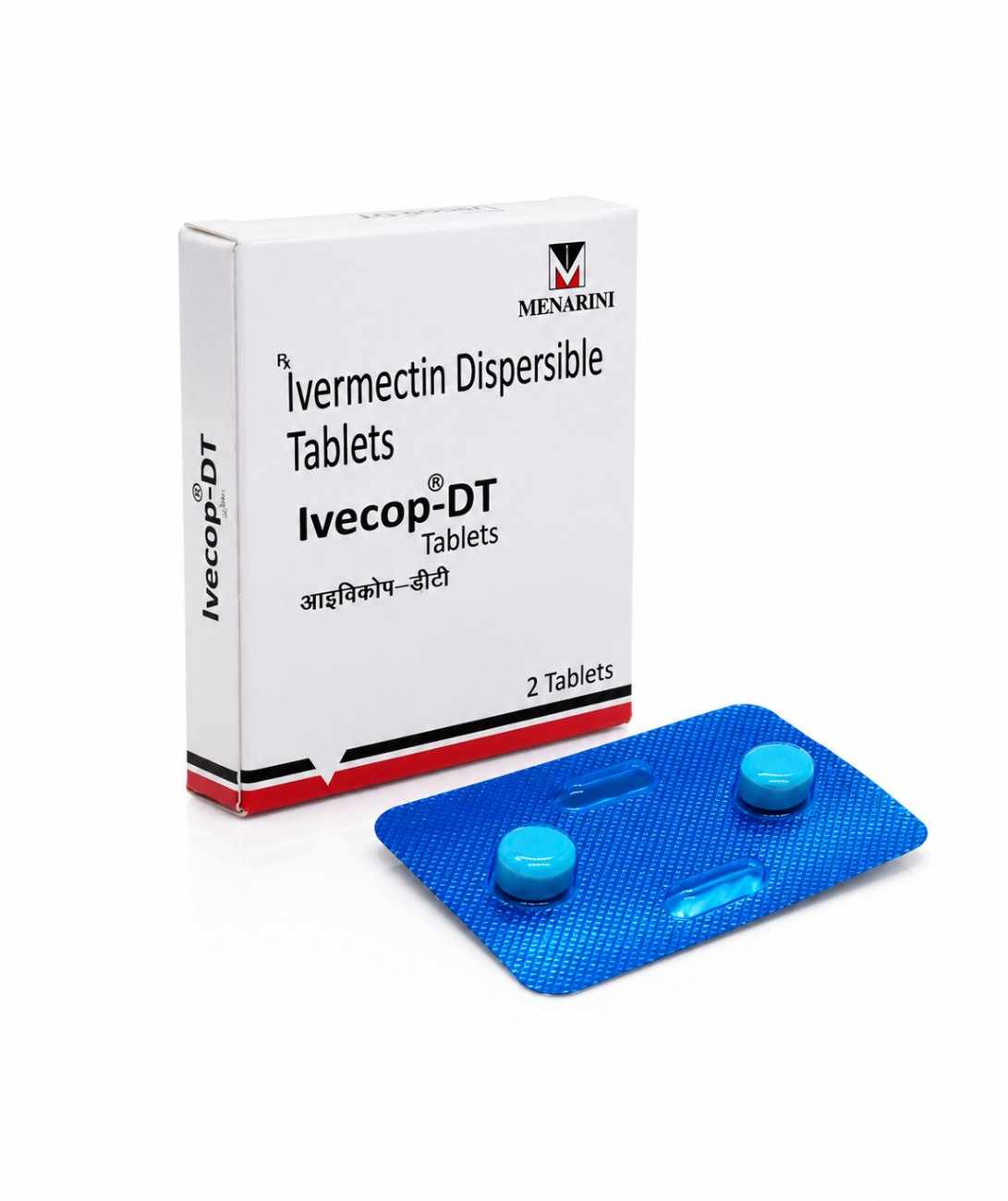
Ivecop DT 3mg
| 3mg | 30 Tablet/s, 60 Tablet/s, 90 Tablet/s |
|---|---|
| Active Ingredient: | Ivermectin |
| Indication: | Scabies, Filariasis |
| Manufacturer: | Menarini India Pvt Ltd |
| Packaging: | 2 Tablet in 1 strip |
| Strength: | 3mg |
| Delivery Time: | 6 To 15 days |
| 3mg |
30 Tablet/s, 60 Tablet/s, 90 Tablet/s |
|---|---|
| Active Ingredient: |
Ivermectin |
| Indication: |
Scabies, Filariasis |
| Manufacturer: |
Menarini India Pvt Ltd |
| Packaging: |
2 Tablet in 1 strip |
| Strength: |
3mg |
| Delivery Time: |
6 To 15 days |
20% OFF
Use coupon GPA20
Valid for order above AUD$499.00
|
|
||||||||||||||||||||||||

Description
Introduction
Ivecop DT 3mg is an oral antiparasitic medicine containing ivermectin 3 mg per tablet. Ivermectin belongs to a class of medicines called anthelmintics, which act against certain parasitic infections. Treatment requires appropriate diagnosis and medical assessment because different parasites respond to different medicines.
The 3 mg strength indicates the amount of active ingredient in each tablet. It does not represent a standard dose for every patient. The appropriate treatment depends on the infection, body weight, medical history and other individual factors.
What Is It?
Ivecop DT 3mg contains ivermectin, an antiparasitic ingredient used in the management of selected infections caused by susceptible organisms. Its effectiveness depends on the parasite involved and the clinical circumstances.
Not every intestinal worm or skin infestation responds to ivermectin. A healthcare professional should establish whether the medicine is suitable and whether follow-up examinations are needed to confirm treatment response.
How Does It Work?
Ivermectin acts on specific nerve and muscle signalling pathways in susceptible parasites. It binds to glutamate-gated chloride channels, increasing chloride movement across cell membranes. This disrupts parasite function, resulting in paralysis and death of susceptible organisms.
Its effects differ between parasite species and developmental stages. In onchocerciasis, ivermectin primarily acts against immature worms rather than eliminating adult worms. Further clinical assessment and treatment may therefore be necessary for some infections.
Common Uses
Ivermectin is used to treat intestinal strongyloidiasis caused by Strongyloides stercoralis and to control onchocerciasis caused by Onchocerca volvulus. Oral ivermectin is also sometimes prescribed for other parasitic conditions, including scabies, when clinically appropriate.
The choice of treatment depends on the diagnosed infection and applicable medical guidance. Persistent symptoms do not necessarily indicate treatment failure and may require further investigation rather than additional unsupervised doses.
Available Strengths
Key Features
- Product name: Ivecop DT 3mg.
- Active ingredient: ivermectin.
- Strength: 3 mg per tablet.
- Dosage form: oral tablet.
- Medicine class: antiparasitic anthelmintic.
- Used under medical supervision for selected parasitic infections.
Benefits
- Acts against susceptible parasites through an established antiparasitic mechanism.
- Can treat intestinal strongyloidiasis when appropriately prescribed.
- Helps control immature parasites involved in onchocerciasis.
- May be considered for selected other parasitic conditions following clinical assessment.
- Permits treatment response to be assessed through appropriate follow-up examinations.
These effects relate to ivermectin as an active ingredient. Individual treatment outcomes depend on the infection and clinical circumstances.
Possible Side Effects
Ivermectin may cause unwanted effects, although not everyone experiences them. Some reactions, particularly during treatment of onchocerciasis, may result from the body’s response to affected parasites.
- Nausea, vomiting, abdominal discomfort or diarrhoea.
- Dizziness, light-headedness or weakness.
- Reduced appetite or constipation.
- Skin itching, rash or swelling.
- Joint discomfort or swollen lymph nodes.
- Rare serious reactions, including seizures, confusion, difficulty walking or severe allergic symptoms.
Seek urgent medical assistance for breathing difficulty, substantial facial swelling, seizures, loss of consciousness or significant neurological symptoms. Discuss persistent or troublesome reactions with a healthcare professional.
Precautions
- Disclose any previous allergic reaction to ivermectin or other medicines.
- Discuss pregnancy, planned pregnancy or breastfeeding before treatment.
- Inform the prescriber about immune system disorders and other significant medical conditions.
- Report previous residence or travel in areas of West or Central Africa where Loa loa infection occurs.
- Exercise caution with activities requiring alertness if dizziness develops.
People with substantial Loa loa infection may experience severe neurological reactions following ivermectin treatment. Relevant travel history may require additional assessment before prescribing.
Additional Precautions
- Never substitute veterinary ivermectin preparations for human medicine.
- Children require individual assessment, especially those weighing less than 15 kg.
- Do not share prescribed medicine with another person.
- Attend recommended follow-up appointments and investigations.
- Report persistent or worsening symptoms for further assessment.
For strongyloidiasis, repeated stool examinations may be required to document clearance. People with impaired immunity may need closer monitoring because eliminating infection can be more difficult.
Storage Instructions
- Keep tablets in their original packaging unless a pharmacist advises otherwise.
- Follow the storage instructions printed on the supplied pack.
- Protect the medicine from excessive heat, moisture and direct sunlight.
- Store medicines out of the sight and reach of children.
- Check the expiry date before use.
- Ask a pharmacist how to dispose of expired or unwanted tablets.
How to Take
Ivecop DT 3mg should be taken according to the prescription and the instructions supplied with the medicine. The required number of tablets and treatment schedule depend on the diagnosed infection and individual clinical factors.
- Confirm the prescribed strength and tablet quantity.
- Ask a pharmacist to explain the correct administration method for this particular tablet presentation.
- Follow the prescribed timing and any applicable food-related instructions.
- Do not take additional tablets to compensate for a missed or uncertain dose without professional advice.
- Complete recommended follow-up investigations to assess treatment response.
Drug Interactions
Other medicines may affect treatment decisions or increase the likelihood of adverse effects. A medication review is therefore important before ivermectin treatment.
- Warfarin: increased international normalised ratio (INR) has been reported rarely with concurrent ivermectin use. Monitoring may be necessary.
- Prescription medicines: inform the healthcare professional about all current treatments.
- Non-prescription medicines: disclose over-the-counter products before treatment.
- Supplements and herbal products: include these in the medication review.
Do not independently alter prescribed medicines because of a possible interaction. A pharmacist or prescriber can assess the combination.
Why Choose This Product?
- Contains ivermectin, an established antiparasitic active ingredient.
- Provides an identified strength of 3 mg per tablet.
- Offers an oral tablet presentation when ivermectin treatment is clinically appropriate.
- Can be considered within an individual treatment plan established by a healthcare professional.
Medicine selection should reflect the diagnosed condition, appropriate treatment requirements and professional advice.
Frequently Asked Questions (FAQs)
1. What is Ivecop DT 3mg?
It is an oral tablet containing ivermectin 3 mg, an ingredient used to treat selected parasitic infections.
2. Is ivermectin an antibiotic?
No. Ivermectin is an antiparasitic medicine and does not replace antibiotics used for bacterial infections.
3. Can ivermectin treat scabies?
Oral ivermectin is sometimes prescribed for scabies. Suitability depends on individual clinical circumstances.
4. Does ivermectin eliminate every intestinal worm?
No. Its effectiveness depends on the parasite species. Different infections may require different medicines.
5. Can children take ivermectin?
Children require medical assessment. Safety and effectiveness have not been established for children weighing less than 15 kg.
6. Can ivermectin be used during pregnancy?
Safety during pregnancy has not been established. Pregnant patients should discuss treatment risks with their prescriber.
7. What happens if a dose is missed?
Contact the prescribing healthcare professional for instructions rather than taking an additional dose independently.
8. Can ivermectin cause dizziness?
Yes. Dizziness and light-headedness are recognised possible adverse effects. Avoid hazardous activities if affected.
9. How is treatment success checked?
Assessment depends on the infection and may involve symptom review, stool examinations or other investigations.
10. Does ivermectin kill adult worms responsible for onchocerciasis?
No. It primarily affects immature worms, so continued clinical monitoring and further treatment may be required.
Product Categories
Be the first to review “Ivecop DT 3mg”
Related products


Reviews
There are no reviews yet.