Sorry, nothing in cart.
Why Choose Us!
- 5+ Lakh Customers Trust Us for Fast & Safe Delivery
- Secure Checkout – Your Data Stays 100% Private
- Express Delivery – No Waiting, No Delays
- Best Value For Money Guaranteed
- Get Premium Quality At Budget – Friendly Prices
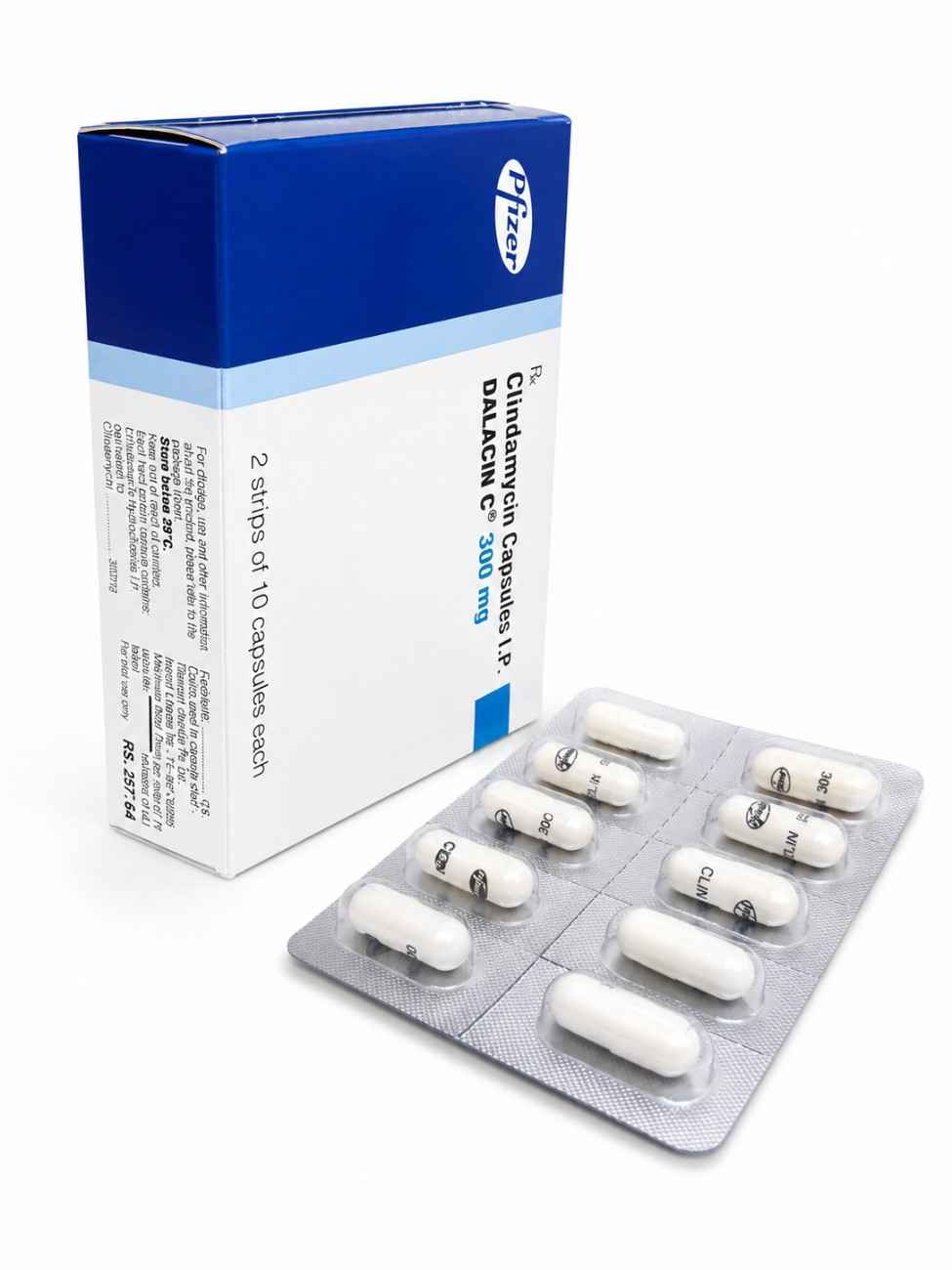
Dalacin C 300mg – Clindamycin
| 300mg | 30 Capsule/s, 60 Capsule/s, 90 Capsule/s |
|---|---|
| Active Ingredient: | Clindamycin |
| Indication: | Bacterial infections |
| Manufacturer: | Pfizer India Ltd |
| Packaging: | 10 Capsule in 1 strip |
| Strength: | 300mg |
| Delivery Time: | 6 To 15 days |
| 300mg |
30 Capsule/s, 60 Capsule/s, 90 Capsule/s |
|---|---|
| Active Ingredient: |
Clindamycin |
| Indication: |
Bacterial infections |
| Manufacturer: |
Pfizer India Ltd |
| Packaging: |
10 Capsule in 1 strip |
| Strength: |
300mg |
| Delivery Time: |
6 To 15 days |
20% OFF
Use coupon GPA20
Valid for order above AUD$499.00
|
|
||||||||||||||||||||||||

Description
Introduction
Dalacin C 300mg is an antibiotic medicine containing clindamycin, an active ingredient used to treat certain bacterial infections. Clindamycin belongs to the lincosamide antibiotic group and interferes with bacterial growth.
Antibiotic treatment requires consideration of the infection, bacterial susceptibility and individual health circumstances. Clindamycin can cause serious intestinal complications, making appropriate medical supervision and awareness of warning symptoms important.
What Is It?
Dalacin C 300mg contains 300 mg of clindamycin per capsule. It is an oral antibiotic presentation available in quantities of 30, 60 and 90 capsules, with 10 capsules per strip.
Clindamycin is used against susceptible bacteria. It does not treat viral illnesses such as influenza or the common cold. Unnecessary antibiotic use can contribute to antimicrobial resistance.
How Does It Work?
Clindamycin interferes with bacterial protein synthesis, slowing or stopping the growth of susceptible bacteria. This activity helps the body’s defences control certain bacterial infections.
Effectiveness depends on the organism involved and its susceptibility to clindamycin. Some bacteria are resistant, so clinical assessment and, when appropriate, laboratory testing help guide treatment selection.
Common Uses
Clindamycin is used for selected bacterial infections, including certain infections involving the skin, soft tissues, respiratory tract, bones and joints. It also has activity against some anaerobic bacteria.
The appropriate treatment depends on infection severity, bacterial susceptibility and individual medical circumstances. These are general clinical applications of clindamycin rather than a statement that every condition is authorised for this particular presentation.
Available Strengths
This family is available in 150 mg, 300 mg.
Key Features
- Active ingredient: clindamycin.
- Strength: 300 mg per capsule.
- Dosage form: oral capsule.
- Medicine class: lincosamide antibiotic.
- Available quantities: 30, 60 and 90 capsules.
- Packaging: 10 capsules per strip.
- Treatment category: susceptible bacterial infections.
Benefits
Clindamycin provides an antibacterial treatment option when the responsible bacteria are susceptible and its use is clinically appropriate.
- Interferes with bacterial growth and multiplication.
- Has activity against certain anaerobic organisms.
- Provides an oral treatment option for selected infections.
- May be considered when alternative antibiotics are unsuitable.
- Supports infection management within a prescribed treatment plan.
Clinical outcomes vary according to the infection and individual response. Treatment suitability must be assessed by a healthcare professional.
Possible Side Effects
Clindamycin can cause adverse effects ranging from temporary discomfort to serious complications requiring urgent medical attention.
- Nausea, vomiting or an unpleasant metallic taste.
- Joint pain or vaginal irritation and discharge.
- Skin rash, itching or hives.
- New or worsening heartburn or painful swallowing.
- Yellowing of the skin or eyes, or reduced urination.
- Severe allergic reactions involving swelling or breathing difficulties.
- Watery or bloody diarrhoea, abdominal cramps or fever.
Clindamycin can cause potentially life-threatening antibiotic-associated colitis, including Clostridioides difficile-associated diarrhoea. Symptoms may occur during treatment or several months afterwards. Seek urgent medical assessment for severe or persistent diarrhoea, bloody stools or significant abdominal pain.
Precautions
- Disclose allergies to clindamycin, lincomycin or other medicines.
- Report previous colitis, persistent diarrhoea or intestinal disease.
- Discuss existing liver or kidney conditions.
- Mention asthma, eczema or significant allergy history.
- Inform your clinician about pregnancy, planned pregnancy or breastfeeding.
- Report unusual or worsening symptoms promptly.
The possibility of serious intestinal adverse effects is an important consideration when selecting clindamycin. A healthcare professional should assess the expected benefits and potential risks.
Additional Precautions
- Use antibiotics only for clinically appropriate bacterial infections.
- Do not share prescribed medicine with another person.
- Discuss previous antibiotic-associated diarrhoea before treatment.
- Report swallowing difficulties or persistent throat irritation.
- Attend recommended follow-up appointments.
- Seek emergency care for breathing difficulties or severe skin reactions.
Incorrect or unnecessary antibiotic use may contribute to resistance. Follow medical instructions and seek advice if the infection does not improve as expected.
Storage Instructions
- Keep the medicine in its original packaging.
- Store at room temperature away from excessive heat.
- Protect from moisture and avoid damp bathrooms.
- Keep out of sight and reach of children.
- Check the expiry date before use.
- Ask a pharmacist about appropriate disposal of unwanted medicine.
Follow any additional storage directions provided with the supplied medicine.
How to Take
Oral clindamycin capsules are taken according to an individual prescription. The schedule and duration depend on the infection and response to treatment.
- Follow the prescribed instructions carefully.
- Swallow clindamycin capsules whole without crushing or chewing.
- Take capsules with a full glass of water.
- Remain upright for at least 30 minutes afterwards.
- Take doses at the prescribed times.
- Do not double doses to compensate for a missed dose.
- Contact your clinician if symptoms worsen or do not improve.
Complete the prescribed treatment unless your healthcare professional advises otherwise. Serious adverse reactions require prompt medical attention.
Drug Interactions
Clindamycin treatment may require additional consideration when other medicines are being used. Your healthcare professional should review your medication history.
- Disclose all prescription medicines.
- Include non-prescription medicines and supplements.
- Mention vitamins and herbal preparations.
- Inform your clinician about other antibiotics.
- Request professional advice before introducing additional medicines.
Some combinations may require monitoring or treatment adjustments. Do not independently change prescribed medicines because of a suspected interaction.
Why Choose This Product?
Dalacin C 300mg provides a defined-strength clindamycin capsule presentation for circumstances where oral clindamycin treatment is considered appropriate.
- Contains 300 mg of clindamycin per capsule.
- Provides an oral antibiotic presentation.
- Available in three capsule quantities.
- Contains an established lincosamide antibacterial ingredient.
- Can form part of an individually prescribed infection treatment plan.
Product selection should reflect medical suitability rather than strength or quantity alone.
Frequently Asked Questions (FAQs)
1. What is Dalacin C 300mg used for?
It contains clindamycin, which treats selected infections caused by susceptible bacteria. A healthcare professional determines whether it is appropriate.
2. Is Dalacin C 300mg an antibiotic?
Yes. Clindamycin belongs to the lincosamide group of antibiotics.
3. Can clindamycin treat viral infections?
No. It does not treat influenza, common colds or other viral illnesses.
4. How does clindamycin work?
It interferes with bacterial protein production, slowing or stopping the growth of susceptible organisms.
5. Can clindamycin cause serious diarrhoea?
Yes. Antibiotic-associated colitis can occur during treatment or months afterwards. Seek urgent medical advice for watery or bloody diarrhoea.
6. Is clindamycin suitable during pregnancy?
Pregnancy requires an individual assessment of potential benefits and risks by a healthcare professional.
7. What happens if I miss a dose?
Take it when remembered unless the next dose is nearly due. Do not double doses. Follow your prescribed instructions.
8. How should clindamycin capsules be stored?
Store at room temperature, protected from excessive heat and moisture, and keep away from children.
9. Can clindamycin cause allergic reactions?
Yes. Rash or itching may occur. Facial swelling or breathing difficulties require emergency medical attention.
10. Should treatment continue after symptoms improve?
Follow the prescribed treatment duration unless a healthcare professional advises otherwise. Seek medical attention for serious adverse effects.
Related Products
- Dalacin C 150mg – Clindamycin
- Dalacin C 300mg – Clindamycin
- Cetil 250 mg (Cefuroxime)
- Claribid 250 Mg Tablet (Clarithromycin)
- Metronidazole 200 Mg Australia
- Roxid 150 mg (Roxithromycin)
Product Categories
Be the first to review “Dalacin C 300mg – Clindamycin”
Related products



Reviews
There are no reviews yet.