Sorry, nothing in cart.
Why Choose Us!
- 5+ Lakh Customers Trust Us for Fast & Safe Delivery
- Secure Checkout – Your Data Stays 100% Private
- Express Delivery – No Waiting, No Delays
- Best Value For Money Guaranteed
- Get Premium Quality At Budget – Friendly Prices
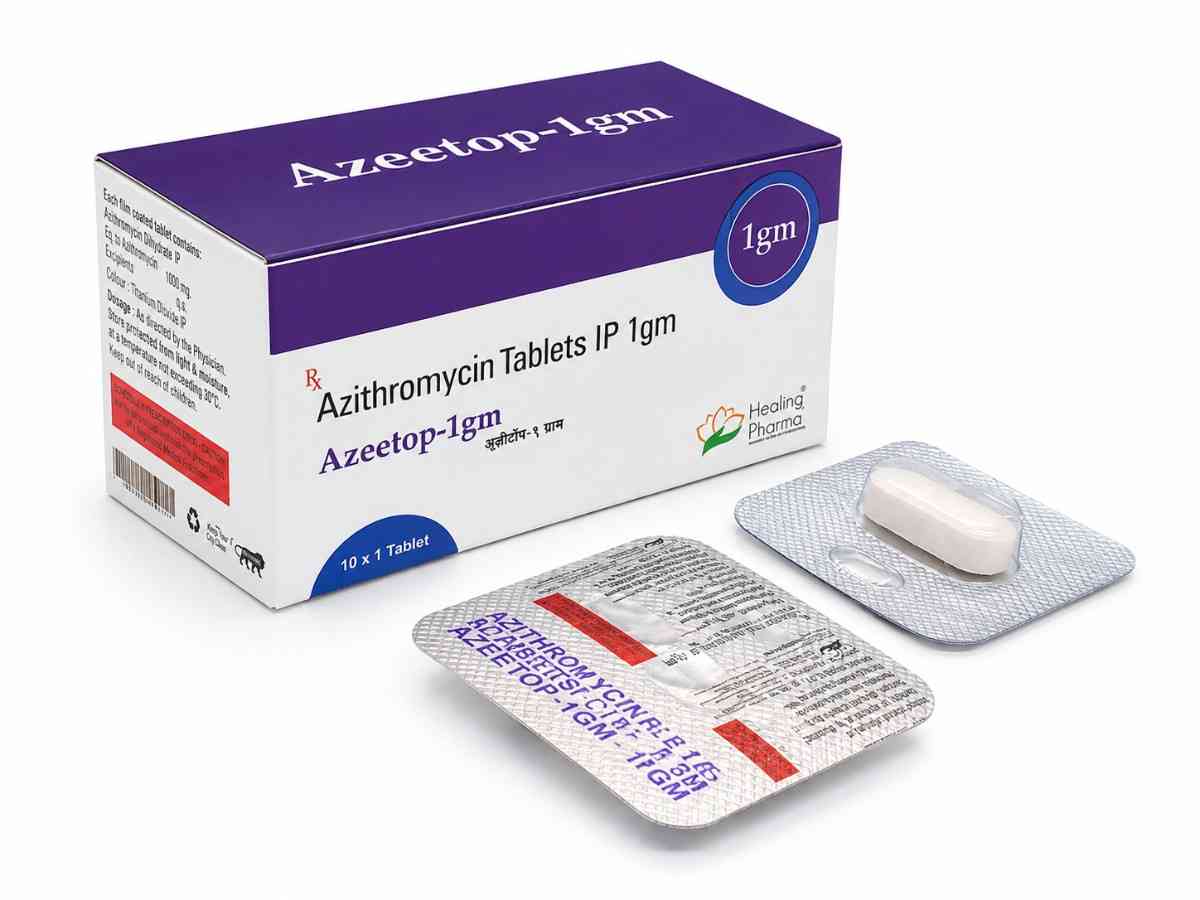
Azeetop 1000mg
| 1g | 10 Tablet/s, 20 Tablet/s, 30 Tablet/s |
|---|---|
| Active Ingredient: | Azithromycin |
| Indication: | Bacterial infections |
| Manufacturer: | Healing Pharma, India |
| Packaging: | 1 Tablet in 1 strip |
| Strength: | 1000mg |
| Delivery Time: | 6 To 15 days |
| 1g |
10 Tablet/s, 20 Tablet/s, 30 Tablet/s |
|---|---|
| Active Ingredient: |
Azithromycin |
| Indication: |
Bacterial infections |
| Manufacturer: |
Healing Pharma, India |
| Packaging: |
1 Tablet in 1 strip |
| Strength: |
1000mg |
| Delivery Time: |
6 To 15 days |
20% OFF
Use coupon GPA20
Valid for order above AUD$499.00
|
|
||||||||||||||||||||||||

Description
Introduction
Azeetop 1000mg is an antibiotic tablet containing azithromycin 1000 mg (1 g). Azithromycin belongs to the macrolide antibiotic group and is used to treat selected bacterial infections. Treatment suitability depends on the infection, bacterial susceptibility and the patient’s medical circumstances.
Antibiotics do not treat viral infections, including colds and influenza. Azeetop 1000mg should be used only when prescribed by a healthcare professional. Its 1000 mg strength does not mean that this amount is appropriate for every infection or patient.
What Is It?
Azeetop 1000mg contains azithromycin, an antibacterial medicine that interferes with bacterial protein production. Each tablet contains 1000 mg of the active ingredient. The medicine is intended for oral administration according to an individual prescription.
Azithromycin is used in managing certain infections caused by susceptible bacteria. The appropriate strength, treatment schedule and duration depend on the diagnosed condition. Different azithromycin formulations should not be substituted without professional advice.
How Does It Work?
Azithromycin binds to the 50S subunit of bacterial ribosomes, interfering with protein synthesis. This limits the ability of susceptible bacteria to grow and multiply, helping the immune system control the infection.
Effectiveness depends on whether the bacteria causing the infection are susceptible to azithromycin. Antibiotic resistance can reduce treatment effectiveness. Azithromycin does not directly relieve symptoms caused by viruses.
Common Uses
Azithromycin may be prescribed for selected bacterial respiratory infections, including certain cases of pneumonia, sinusitis and throat infections. Other ingredient-level uses include particular skin and soft tissue infections and certain sexually transmitted bacterial infections.
These uses do not mean that every condition requires azithromycin or a 1000 mg dose. Antibiotic selection depends on diagnosis, local resistance patterns, patient characteristics and applicable clinical guidance.
Available Strengths
Key Features
- Product name: Azeetop 1000mg.
- Active ingredient: azithromycin.
- Strength: 1000 mg (1 g) per tablet.
- Dosage form: tablet for oral use.
- Medicine class: macrolide antibiotic.
- Packaging: one tablet per strip.
- Used under medical direction for selected susceptible bacterial infections.
Benefits
- Helps control infections caused by susceptible bacteria.
- Limits bacterial multiplication by interfering with protein synthesis.
- Provides an oral antibiotic option when azithromycin is clinically appropriate.
- Can address different bacterial infection types depending on diagnosis.
- May help infection-related symptoms improve when treatment is effective.
- Supports targeted treatment when bacterial infection is confirmed or strongly suspected.
Individual responses vary. The medicine’s benefits depend on bacterial susceptibility, infection severity and appropriate prescribing.
Possible Side Effects
Azithromycin may cause unwanted effects, although not everyone experiences them. Digestive symptoms are among the most frequently reported.
- Nausea, vomiting or stomach discomfort.
- Diarrhoea or loose stools.
- Headache.
- Occasional dizziness or changes in taste.
- Liver problems, including rare serious liver injury.
- Serious allergic reactions involving swelling or breathing difficulties.
- Severe skin reactions with blistering or peeling.
- Abnormal heart rhythms associated with QT prolongation.
- Severe antibiotic-associated diarrhoea or colitis.
Seek urgent medical attention for breathing difficulties, facial swelling, fainting, severe skin reactions or an irregular heartbeat. Severe, persistent or bloody diarrhoea requires prompt assessment, including when it develops after treatment.
Precautions
- Do not take azithromycin if you have a known allergy to azithromycin or related macrolide antibiotics.
- Report previous jaundice or liver problems associated with azithromycin.
- Discuss existing liver or kidney disease.
- Inform your prescriber about prolonged QT interval or other heart rhythm disorders.
- Disclose low potassium or magnesium levels.
- Report myasthenia gravis because muscle weakness may worsen.
- Discuss any previous serious antibiotic reaction.
Additional Precautions
- Pregnancy requires an individual assessment of treatment benefits and risks.
- Inform your clinician if breastfeeding or planning to breastfeed.
- Older adults may have increased susceptibility to certain cardiac effects.
- Seek reassessment if symptoms worsen or fail to improve.
- Do not share prescribed antibiotics with another person.
- Avoid unnecessary antibiotic use because it contributes to bacterial resistance.
Storage Instructions
- Follow the storage directions printed on the supplied packaging.
- Keep tablets in their original packaging until needed.
- Protect the medicine from excessive heat and moisture.
- Keep securely out of reach of children and pets.
- Check the expiry date before use.
- Ask a pharmacist how to dispose of unwanted or expired medicine.
How to Take
The prescribed dose and treatment duration depend on the infection and individual medical circumstances. The 1000 mg strength should not be interpreted as a routine daily dose or standard course.
- Follow the instructions provided by your prescriber and pharmacist.
- Confirm the prescribed tablet quantity and treatment schedule.
- Check the supplied packaging or ask a pharmacist about administration with food.
- Complete the prescribed course unless a healthcare professional advises otherwise.
- If a dose is missed, follow professional advice and do not double doses.
- If vomiting occurs soon after administration, seek advice before repeating the dose.
- Report serious reactions promptly and obtain urgent assistance when necessary.
Drug Interactions
Azithromycin can interact with other medicines. Tell your healthcare professional about prescription medicines, non-prescription treatments and supplements.
- Aluminium- or magnesium-containing antacids may require separation from azithromycin doses.
- Warfarin may require additional monitoring of blood clotting measurements.
- Medicines that prolong the QT interval can increase cardiac rhythm risks.
- Antiarrhythmic medicines, including amiodarone and sotalol, require caution.
- Digoxin may require monitoring because interactions can affect its exposure.
- Nelfinavir can increase azithromycin exposure and may require monitoring for adverse effects.
Why Choose This Product?
- Contains the identified active ingredient azithromycin.
- Provides a clearly specified 1000 mg tablet strength.
- Offers an oral presentation for prescribed antibiotic treatment.
- May be appropriate when a clinician specifically selects this strength.
- Uses an antibiotic ingredient with an established antibacterial mechanism.
The decision to use this medicine should reflect diagnosis, bacterial susceptibility, medical history and professional assessment rather than strength alone.
Frequently Asked Questions (FAQs)
1. What is Azeetop 1000mg used for?
It contains azithromycin, an antibiotic used for selected bacterial infections when clinically appropriate.
2. Can Azeetop 1000mg treat colds or influenza?
No. Azithromycin does not treat viral infections such as colds or influenza.
3. Is 1000 mg a standard azithromycin dose?
No single dose is appropriate for every infection. The prescribed amount depends on the condition and patient.
4. Can azithromycin cause diarrhoea?
Yes. Mild diarrhoea may occur, while severe, persistent or bloody diarrhoea needs prompt assessment.
5. Is azithromycin suitable for people with heart conditions?
Some heart conditions increase the risk of rhythm disturbances. Suitability requires medical assessment.
6. Can azithromycin be used during pregnancy?
A healthcare professional should assess its potential benefits and risks during pregnancy.
7. What if a dose is missed?
Follow the prescribed instructions or ask a pharmacist. Do not take double doses.
8. Does azithromycin interact with antacids?
Yes. Certain aluminium- or magnesium-containing antacids may require a dosing interval.
9. How quickly might symptoms improve?
Symptoms may improve within several days. Worsening or persistent symptoms require reassessment.
10. Should treatment continue after symptoms improve?
Follow the prescribed course unless a healthcare professional advises otherwise. Serious reactions require prompt medical attention.
Product Categories
Be the first to review “Azeetop 1000mg”
Related products

Reviews
There are no reviews yet.